American Gaming Association Study Highlights Financial Literacy Edge for Gamblers Over Non-Gamblers
Avery Schwarz · Sep 29, 2026

American Gaming Association Study Highlights Financial Literacy Edge for Gamblers Over Non-Gamblers
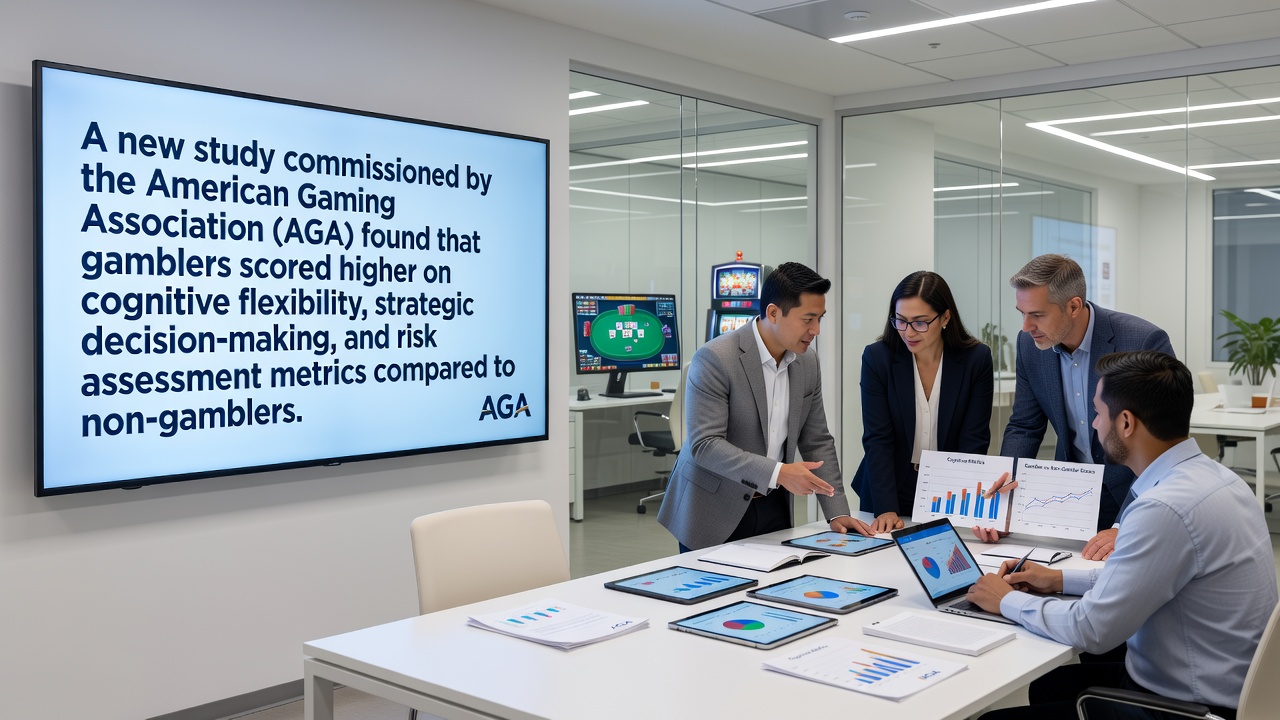
The American Gaming Association recently released findings from a newly commissioned study that examined financial literacy levels across different population segments, and the results show gamblers achieving higher scores than non-gamblers on standardized assessments while the research also explored prediction markets as part of its broader analysis of financial habits.
Research Scope and Methodology
Experts designed the project to compare how individuals who participate in gambling activities manage money compared with those who do not engage in such pursuits, and the study collected data on knowledge areas such as budgeting, investment principles, credit management, and risk assessment. Researchers incorporated questions about prediction markets, which allow participants to trade contracts based on event outcomes, because these platforms share structural similarities with certain gambling formats yet operate under distinct regulatory frameworks in many jurisdictions.
Data collection occurred through surveys and financial literacy tests administered to representative samples, while analysts cross-referenced responses with self-reported gambling frequency and participation in prediction market activities. The approach allowed the team to identify patterns without relying on self-assessed confidence measures alone, and the methodology emphasized objective scoring on multiple-choice items covering core financial concepts.
Core Findings on Literacy Scores
Gamblers recorded higher average scores on the financial literacy portion of the assessment than non-gamblers, a result that held after controlling for basic demographic variables in the initial analysis. Participants who reported regular engagement with gambling products demonstrated stronger performance on items related to probability understanding and long-term financial planning, whereas those with no gambling activity posted comparatively lower marks across the same set of questions.
The study also tracked differences in everyday financial behaviors, including frequency of budget reviews, types of savings vehicles used, and approaches to debt repayment. Figures reveal that gamblers tended to monitor account activity more consistently and showed greater familiarity with compound interest calculations, though the research stops short of establishing causation between gambling participation and these habits.
Prediction Markets Under the Microscope
Alongside the literacy comparisons, the research team devoted significant attention to prediction markets and their overlap with traditional gambling products. Observers note that prediction markets often require users to evaluate probabilities and update beliefs based on new information, skills that align closely with certain financial decision-making processes. The study found that individuals active in prediction markets frequently overlapped with the gambler cohort and posted strong literacy results, yet it also documented cases where prediction market participants maintained separate investment portfolios that followed conventional strategies.
Researchers examined how regulatory treatment of prediction markets varies by state and how those differences might influence participation rates and literacy outcomes. Data shows that markets operating under clearer rules attracted more consistent user bases, while participants in less defined environments reported higher uncertainty about tax implications and platform security. The report connects these observations to broader questions about how access to structured betting environments correlates with financial knowledge acquisition over time.
Differences in Daily Financial Habits
Beyond test scores, the study catalogued concrete habit variations between the two groups. Gamblers more often reported setting aside dedicated funds for entertainment expenses rather than drawing from general accounts, and they demonstrated higher rates of tracking win-loss records across sessions. Non-gamblers, by contrast, showed greater reliance on automatic bill-pay systems but lower engagement with active investment tools such as index funds or individual stocks.
The analysis further broke down habits by age cohort and income bracket, revealing that the literacy advantage among gamblers appeared most pronounced in the 25-to-44 age range. Within that segment, regular gamblers outperformed non-gamblers by noticeable margins on questions involving inflation-adjusted returns and diversification principles. The report presents these breakdowns as descriptive patterns rather than prescriptive recommendations for any particular audience.
Context Within Industry Research
The American Gaming Association has previously supported studies on economic contributions and consumer behavior, yet this project marks a focused effort to quantify financial knowledge disparities. Similar research from academic institutions has occasionally touched on overlapping themes, but the current findings stand out because they isolate literacy metrics while simultaneously addressing prediction markets. Industry analysts have begun referencing the data in discussions about responsible gaming initiatives and educational outreach programs.
Links to the full study details appear in coverage from industry outlets, including reports available through North American casino news sources and additional context provided by broader gaming industry updates. These summaries emphasize the raw score differences without attributing motives or outcomes beyond what the commissioned research measured.
Conclusion
The AGA-commissioned research supplies new comparative data on financial literacy between gamblers and non-gamblers, while extending the inquiry into prediction markets and associated behavioral patterns. The documented score advantages and habit distinctions offer researchers and policymakers additional material for ongoing discussions about financial education and market regulation. Further studies will likely build on these baseline measurements as more granular datasets become available in subsequent reporting cycles.